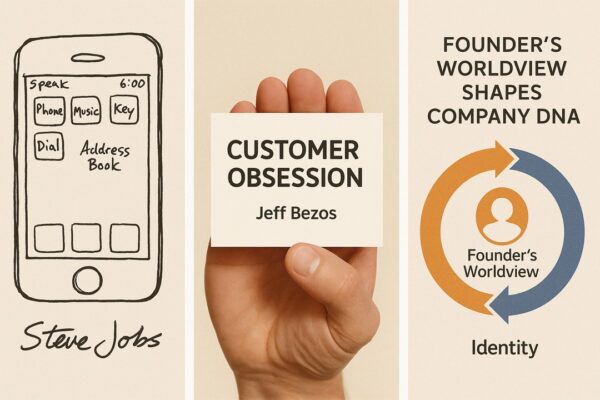
A founder’s philosophy becomes the blueprint of a company.
From this perspective, exploring the formative experiences that led CEO Simon Lee to envision a “world beyond language barriers” provides valuable context for understanding Flitto’s mission, business architecture, and long-term vision.
A Childhood Shaped by Languages and Cultures
Simon Lee’s story begins in his childhood. Born in Kuwait in 1982, he grew up across Saudi Arabia, the United States, and the United Kingdom, following his father’s overseas assignments. Being immersed in multilingual environments from an early age made him realize that language is more than a tool for communication, it is a resource fundamentally tied to culture, education, and opportunity.
kuwait 1980s photographs taken by Dennis Sylvester Hurd
This awareness later crystallized into Flitto’s long-standing slogan, “Beyond Language Barrier,” used consistently since the company’s founding in 2012. It would eventually become the cornerstone of Lee’s leadership philosophy and the company’s vision.
Early Experiments Connecting People Who Needed and Could Provide Language Help
After returning to Korea at age seventeen and attending Daewon Foreign Language High School, Lee entered Korea University as a business major. His relationship with languages continued: fluent in English, French, and other foreign languages, he often helped classmates with translation-related assignments, sometimes in exchange for meals.
This experience sparked a question:
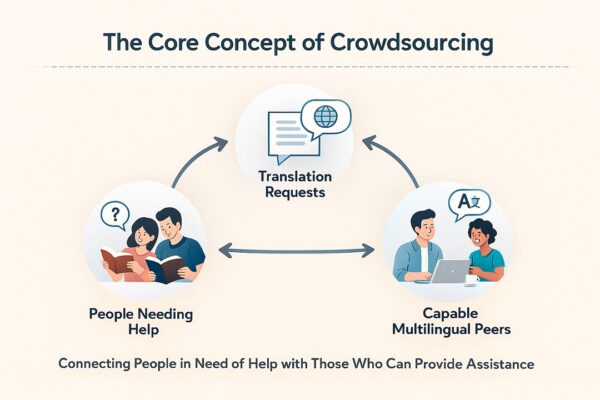
“There are many people who are good at languages, and many who need translation help. What if we simply connected the two?”
During a period when web services and online platforms were rapidly emerging, Lee built his own server and began operating an early version of such a matching system.
As student council president, he organized a pool of multilingual peers, collected translation requests submitted by students, and allowed capable peers to answer them in exchange for small rewards.
This peer-to-peer structure became the conceptual foundation for what would later evolve into the Flitto service.
Flying Cane: The First Step Toward a Scalable Translation Platform
Based on these early experiences, Lee launched Flying Cane after graduating from university, a platform that combined “travel” and “translation.” Users uploaded travel-related translation requests, and participants provided the translations. It was, in essence, a continuation of the student-run system he had operated earlier.
The choice of travel as the core theme was deliberate. Travel situations expose the essence of language barriers most intuitively, and the translation needs, directions, food orders, transport, reservations, tend to be simple and universal, encouraging broad user participation.
As expected, participation grew rapidly, enabling the collection of substantial translation data in a short period.
Seeing the community expand reinforced Lee’s belief that:
“This idea must eventually become a real business.”
In 2009, he even published his translation-platform concept online, stating that anyone could freely use it, yet no one executed it. That silence strengthened his resolve:
“Then I will build it myself.”
From Internal Venture to Independent Startup
At that time, an SK Telecom representative who had been following his idea introduced him to the company’s internal venture program. Lee joined SK Telecom under the condition that his translation platform could be proposed through the initiative. His main responsibilities involved discovering and evaluating global startups for potential investment, but through the internal venture program DoDream, he formally presented the translation-platform concept, laying the foundation for what would ultimately become Flitto.
As smartphones rapidly gained global adoption, Lee saw the perfect timing for a mobile, app-based translation service.
In August 2012, he left SK Telecom and founded Flitto with co-founders Jingu Kim and Donghan Kang.
Flit to a world beyond language barriers
The company name “Flitto” was inspired by the phrase “flit to ~,” meaning “to fly toward.”