![[Flitto Deep Dive – 2] The First Opportunity We Captured on X](https://datalab.flitto.com/en/company/blog/wp-content/uploads/Flitto-Deep-Dive-–-2-The-First-Opportunity-We-Captured-on-X.png)
From the very beginning, Flitto drew both attention and high expectations. Shortly after its founding, the company secured early-stage investment from DSC Investment in Korea and was selected for the Techstars London accelerator program, gaining access to global mentorship and networking opportunities.
Yet despite this momentum, the early days of the platform were far from easy.
The core of any crowdsourced translation service is participation, how many people are willing to contribute, and how quickly? If users requesting translations had to wait days for results, or if translators lacked content to engage with, the platform simply could not sustain itself. Securing active participants became an urgent priority.
One of the earliest channels Flitto focused on was Twitter (now X).
Even at the time, K-Pop artists such as PSY and Super Junior were rising as global stars. Fans around the world followed their accounts, but because their posts were written in Korean, most international followers were unable to understand them. In response, fans across different countries began voluntarily translating the artists’ tweets and sharing them within their communities.
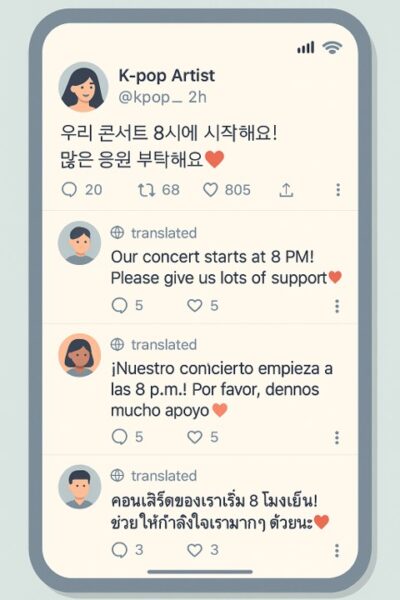
From this organic behavior, Flitto’s founding team recognized the potential for a user-driven translation ecosystem.
To support this emerging behavior, the team built a feature that integrated Twitter and Facebook feeds into Flitto and displayed multilingual translations of celebrity posts. The platform initially provided Korean-to-English translations in-house, but users soon began translating these posts into their own native languages, naturally forming a network of “collective intelligence translation.”
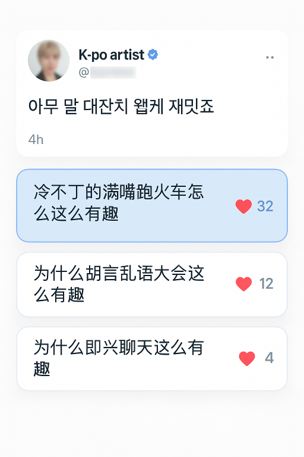
Because translation rarely has a single correct answer, Flitto intentionally designed the system so that multiple users could submit their own versions of the same sentence. Translations with more “likes” appeared higher in the feed, a mechanism that encouraged both collaboration and healthy competition. This structure improved translation quality while simultaneously accumulating a rich diversity of linguistic expressions, enhancing the dataset’s overall value.
The turning point came when PSY directly retweeted Flitto’s service.
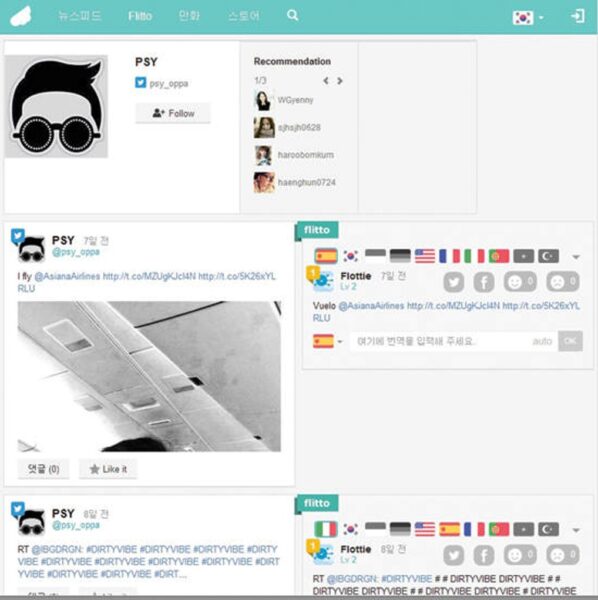
This single act triggered explosive platform growth, amplifying translation results across social media and attracting a wave of new users. As participation surged, multilingual translation data accumulated rapidly. These data were then refined through processes such as personal-information removal and error correction, eventually forming high-quality linguistic datasets.
Flitto went a step further by establishing a Human-in-the-Loop quality management system, introducing multi-stage QC performed by professional translators and reviewers. Through this approach, the company achieved over 99% accuracy and ensured that all datasets were fully consented and clean.
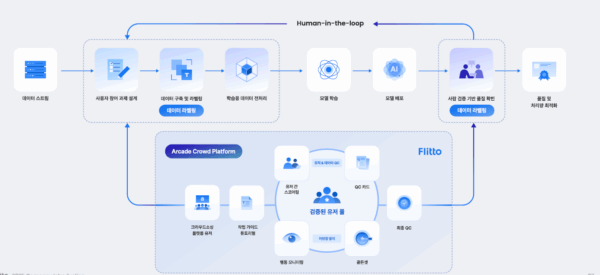
With a robust foundation of high-quality data in place, Flitto began to evaluate how effectively this dataset could train real-world AI models, a process that naturally led into the next phase of technological development.