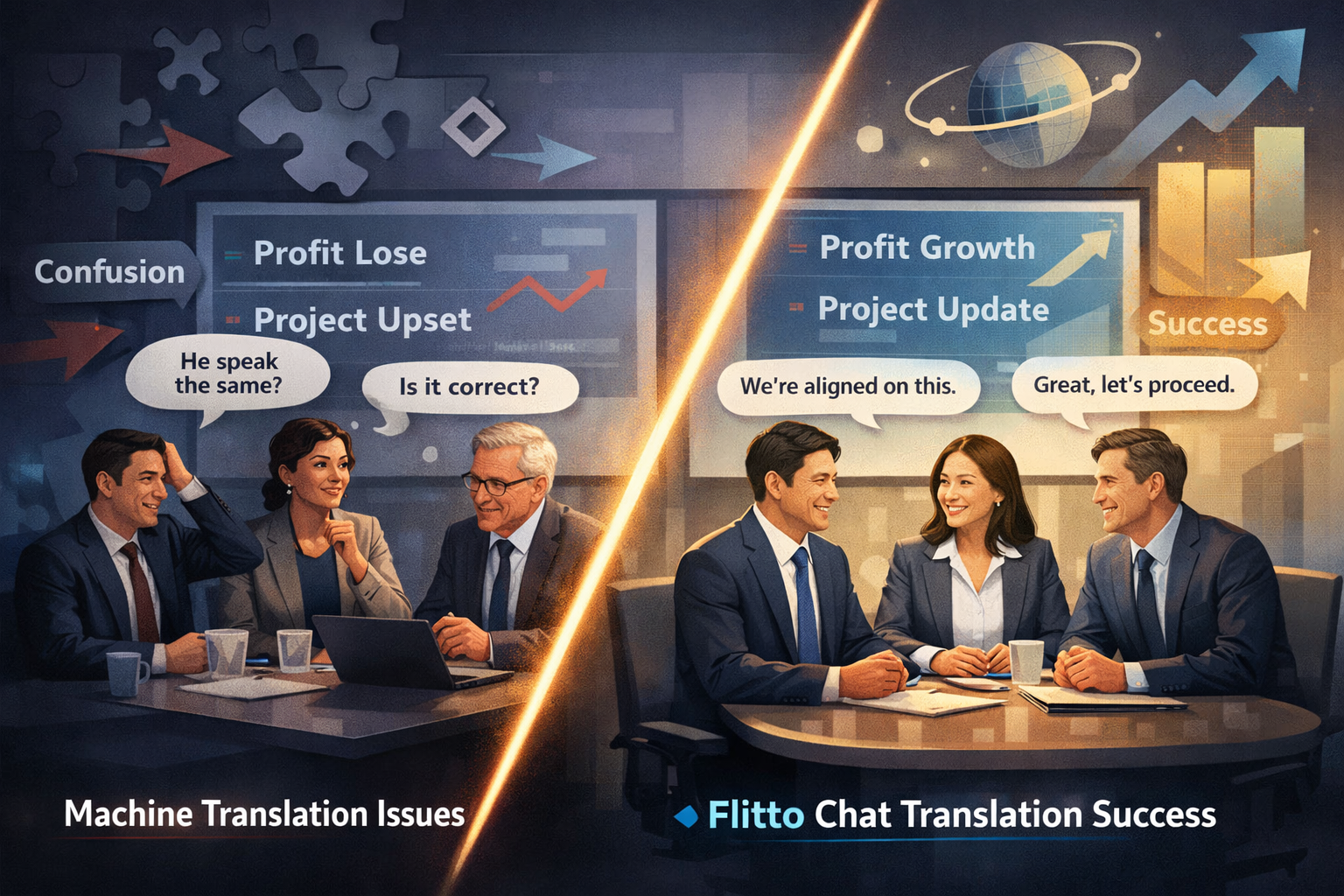
Most AI translation tools perform reasonably well in everyday situations. They help people understand messages, travel abroad, or communicate casually across languages. In those contexts, minor inaccuracies are often tolerable.
But business communication operates under very different conditions.
In meetings, negotiations, project reviews, and decision-making processes, language is not casual. It is domain-specific, role-dependent, and context-accumulative. Every conversation is accountable, documented, and tied to real outcomes.
In this environment, misunderstanding is not an inconvenience. It is a cost.
A mistranslation becomes an operational risk.
This risk typically appears in familiar ways:
- Industry-specific terminology translated literally, ignoring how the term is actually used in the field
- Product names, internal concepts, or project code names misinterpreted as generic words
- The speaker’s intent diluted because prior discussions, ongoing projects, or habitual phrasing are not reflected
- Tone flattened in ways that distort evaluations, negotiations, or strategic feedback
These are not isolated linguistic errors. They are symptoms of a deeper limitation: the translation system does not understand the business environment, the industry language, or the speaker it is translating for.
Why Hyper-Personalization is Necessary in Business
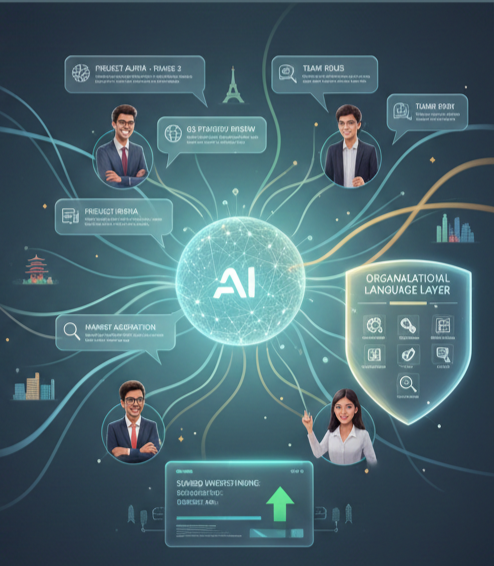
To function in business contexts, translation systems must do more than translate sentences correctly. They must preserve domain meaning, organizational language, and speaker intent.
At the business level, hyper-personalization allows translation systems to:
- Accurately translate industry-specific terminology based on actual domain usage, not dictionary definitions
- Apply company-specific and project-specific language consistently across conversations
- Reflect the speaker’s habitual vocabulary, roles, and ongoing work, enabling more precise contextual interpretation
- Reduce repeated corrections caused by mistranslated terms or misunderstood context
Instead of people constantly adapting their language to the limitations of translation tools, translation adapts to how the business actually communicates.
How Hyper-Personalization Improves Business Communication
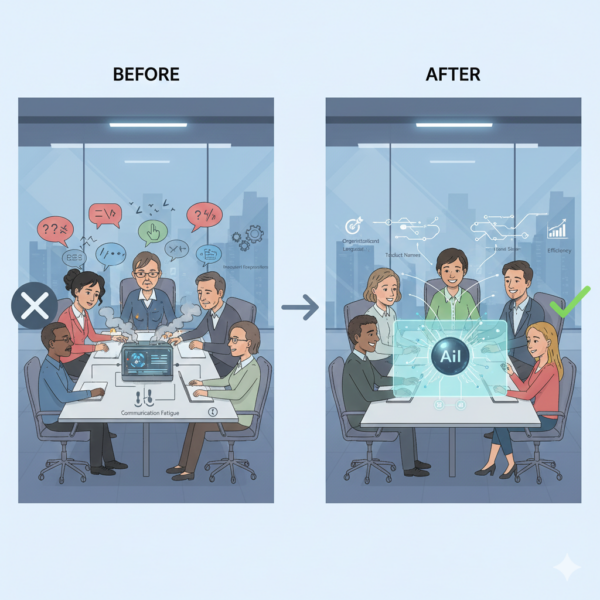
When a translation system understands both organizational context and speaker context, it becomes more than a tool. It becomes a business language layer, embedded in operational workflows.
Before: Without hyper-personalization
- Frequent interruptions to correct industry terms
- Repeated explanations of internal concepts or project names
- Inconsistent terminology across teams and regions
- Cognitive load spent managing wording instead of decisions
After: When translation reflects domain and speaker context by default
- Industry and internal terminology applied automatically
- Project-specific context carried across conversations
- Translations aligned with how each speaker actually communicates
- Conversations flow without correction or clarification
Efficiency does not appear as a metric to be optimized. It emerges naturally as shared understanding is preserved.
Over time, as industry language, internal terminology, and speaker preferences accumulate, accuracy compounds. The system improves not through generic updates, but through continuous, contextual use.
In global business, hyper-personalization is not a feature. It is part of the decision-making infrastructure, because it preserves shared understanding across people, projects, and regions.
The future of business translation is not about speaking more languages. It is about being understood correctly, consistently, and in context, by the organization and by the individual speaking within it.